“The Toilet Right After Peeing” explained in 4 pictures
Free printable Parenting Diary
An event where a child wants to go to the toilet right after peeing in their diaper, leaving the parent puzzled while also feeling the child’s growth as they gradually begin to notice their own body
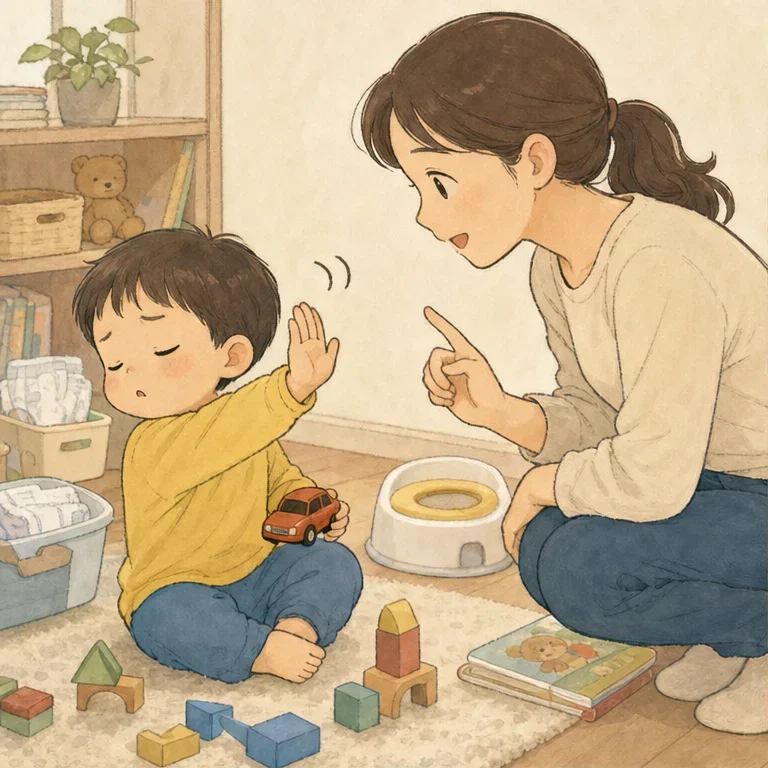
💬 When I Asked Earlier, the Answer Was “No”
That day too, I asked my child, who was absorbed in play, “Want to try going to the toilet?” The answer was an unhesitating “No.” Lately, it seemed like they were starting to get interested in the toilet, but the timing just never seemed to line up. Well, you want to play right now, don’t you? Thinking that, I stopped asking for the moment.
🤔 Does the timing ever seem to go off right after you invite your child to use the toilet?
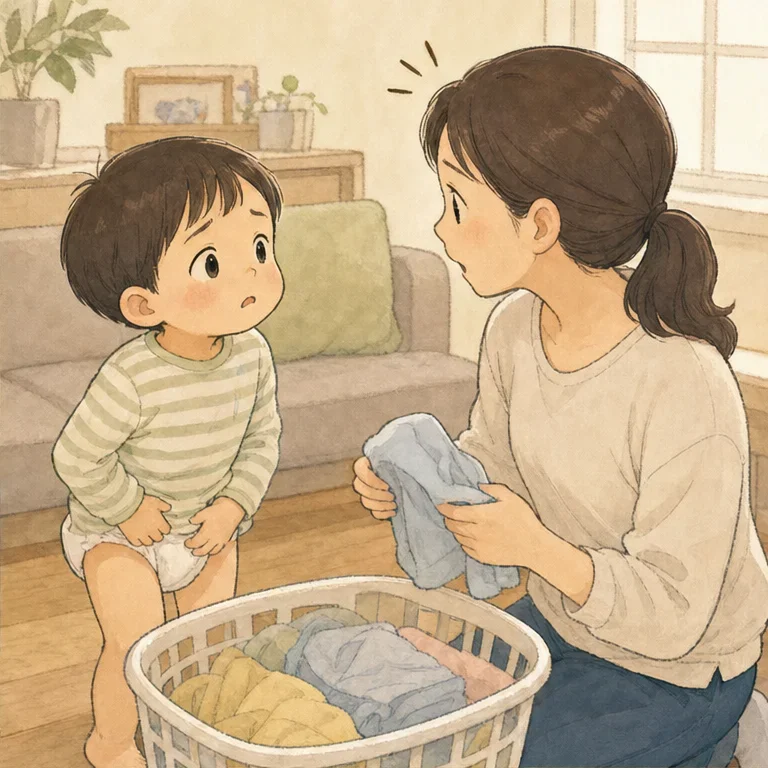
💬 A Few Minutes Later: “Pee-Pee Came Out”
But then, just a few minutes later. My child suddenly stopped and said, while holding their diaper, “Pee-pee came out.” I thought, I just asked you, didn’t I? But their face was so serious that I couldn’t help stopping my chores too.
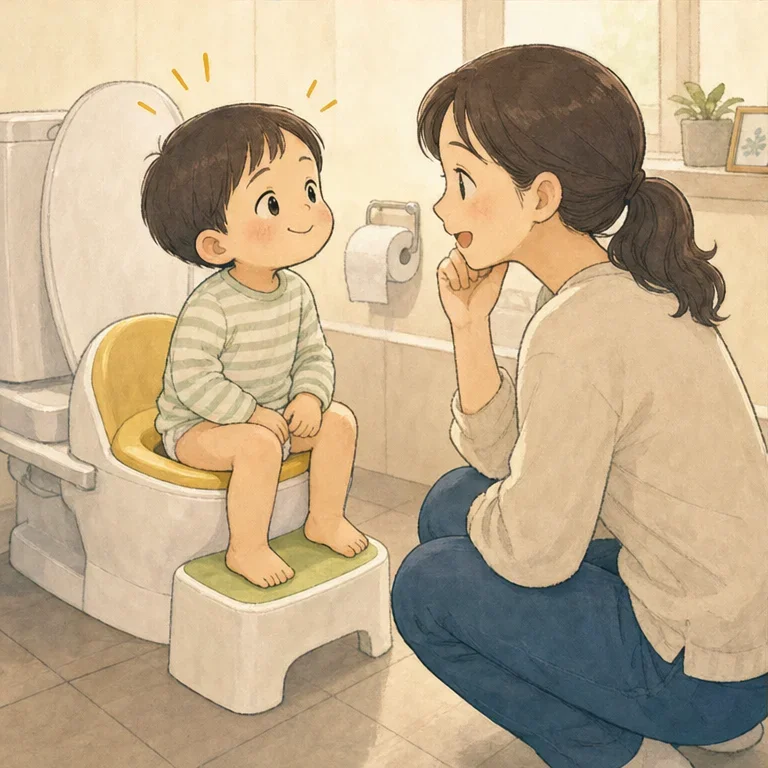
💬 Apparently We’re Going to the Toilet Now
And then, for some reason, my child hurried toward the toilet. Even though they had already gone in the diaper, they sat on the child toilet seat with a satisfied face. They reported, “It came out!” but as a parent, I muttered in my heart, “It came out earlier, though.” But they noticed it themselves and came to the toilet on their own. That whole sequence felt somehow funny, and a little dazzling too.
🤔 Have you ever had a parenting moment where you weren’t sure whether to call it a success or a failure?
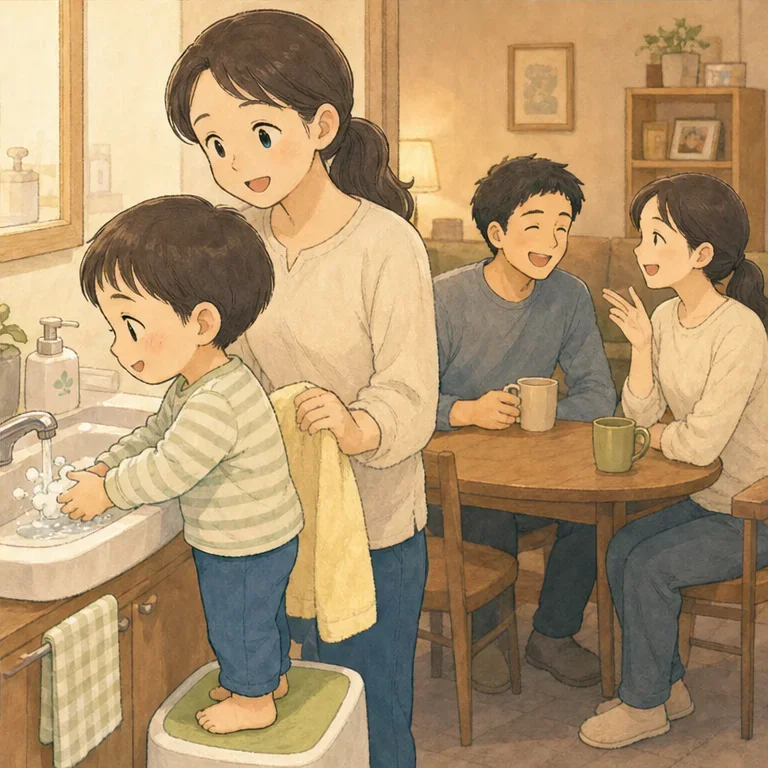
💬 Even Reporting Afterward Is Part of Growing
After that, we changed the diaper, washed hands, and went back to playing as usual. That night, when I told my partner, “Today, after peeing in the diaper, they sat on the toilet so confidently,” the two of us ended up laughing. The timing still doesn’t line up. But they noticed that it had come out, and remembered the toilet. Maybe our family’s potty training is moving forward not through perfect successes, but through a buildup of these “so close!” moments.